
Automotive Social Media Reputation Management

Friday, April 19, 2013


Thursday, April 18, 2013
Enterprise Automotive Marketers Use 16 Content Marketing Tactics
The most successful automotive marketing professionals use an average of 16 different types of content marketing tactics...
The Top Three most widely adopted content marketing tactics are:
1. Videos (87 percent)
2. Website articles (86 percent)
3. In-person events (85 percent)
B2B enterprise marketers use all tactics more frequently than their B2B peers overall do. Like those peers, they find in-person events to be the most effective tactic.

Marketing professionals, including those specializing in automotive use an average of four social media platforms, with Facebook, Twitter, and YouTube being the most popular
B2B focused automotive marketers use Facebook (80 percent) as often as their B2B peers overall do; however, they use YouTube more often (74 percent vs. 61 percent), and Twitter and LinkedIn less often (76 percent vs. 80 percent, and 71 percent vs. 83 percent, respectively).
Nearly half plan to increase their content marketing budgets
Forty-six percent of B2B enterprise marketers, including those specializing in the auto industry plan to increase the amount of budget they allocate to content marketing over the next 12 months, compared with 52 percent of their B2B peers overall.

Sixty-five percent of automotive marketers responding to the survey report outsourcing their content creation tasks...
B2B automotive focused marketers outsource content creation more frequently than their B2B peers overall do (65 percent vs. 43 percent).
Their biggest challenge is producing the kind of content that engages targeted automotive decision makers and consumers...
While their B2B peers overall cite producing enough content as their biggest challenge, B2B auto industry marketers are more challenged with producing content that engages. They also are three-times more likely than their B2B peers overall to be challenged with a lack of integration across marketing.

Just 32 percent believe they are effective or very effective at content marketing
Like their B2B peers overall (36 percent), enterprise marketers struggle with their effectiveness at content marketing. However, B2B marketers across companies of all sizes appear to believe that continued investment in content marketing will pay off: Approximately half of those who rate their organizations as least effective are planning to increase their content marketing spend by nearly as much as their more successful peers are.
Want to learn more? Download our full report to get answers to questions like:
- What goals do B2B enterprise marketers have for content marketing?
- How do they measure content marketing success?
- How do they tailor their content?
- What does the profile of a best-in-class B2B enterprise content marketer look like?
What do you think of the findings? Are they consistent with what you are experiencing? Let us know in the comments!
Special thanks to MarketingProfs for their participation in the annual survey on content marketing and the overall B2B North America comparisons made here.

Follow Author: Joe Pulizzi
Joe Pulizzi considers himself the poster boy for content marketing. Founder of theContent Marketing Institute, Joe evangelizes content marketing around the world through keynotes, articles, tweets and his books, Managing Content Marketing and Get Content Get Customers. If you want to get on his good side, send him something orange. For more on Joe, check out his personal site or follow him on Twitter @juntajoe.
Other posts by Joe Pulizzi
Tuesday, April 16, 2013
GM Goes Head to Head Against Toyota and Nissan in Small Trucks
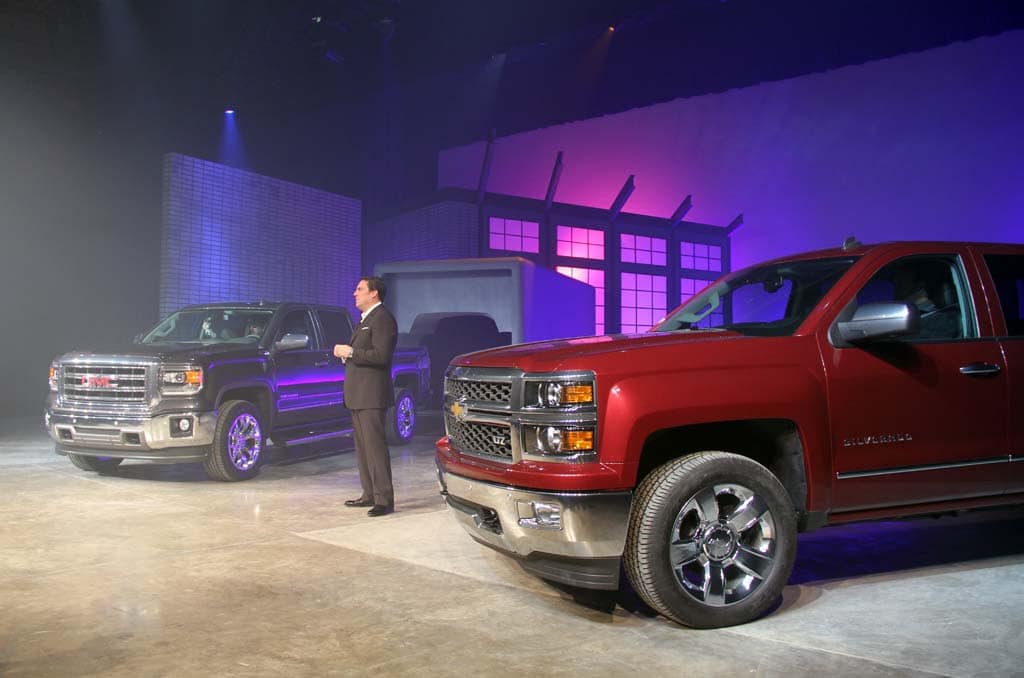
GM President Mark Reuss, shown here with the updated Chevrolet Silverado
General Motors is counting down for the launch of two all-new midsize pickups which will likely reach showrooms in time for the 2015 model-year.
GM hopes to buck the industry trend that has seen a sharp decline in demand for small trucks in recent years – and led both Chrysler

Stay on Top of the News!
But Reuss also promised that the smaller pickups will maintain most of the capabilities of their full-size siblings.
It remains to be seen what names the two new models will get. There's a good chance GM planners will opt for something entirely new rather than picking up the Chevrolet and GMC nameplates the maker stopped producing last year.
"Don't think of them as (Chevrolet) Canyon and (GMC) Colorado replacements because they're not," said Reuss, during an industry breakfast marking the start of the annual Society of Automotive Engineers conference in Detroit. "We're researching the names as we do any new products to see where the legacy names are, do they mean something to people."
That would suggest GM is quote open to using entirely new names that would give the company the chance to completely reposition the new trucks. Without competition from Ford and Chrysler, the all-new Chevy
Just how much of a market there will be for the Chevy and GMC offerings remain to be seen. Clearly, its cross-town rivals don't see much of an opportunity. But GM planners are convinced that if they can deliver solid products that are not only fuel efficient but highly capable it will draw new buyers into a segment that, a few decades ago, actually outsold full-size trucks
Critically, Reuss promised that there will be far more differentiation between the Chevrolet and GMC models than ever before. That extends to not only their basic design but also the way they will be marketed.
"We're going to really target different buyers with these two trucks," the executive explained. "We'd love to have a truck like a Chevrolet…attack the West Coast with a lifestyle truck that is really beautiful and fun. It's a different positioning than a semi-serious duty cycle truck that we might do with a GMC Canyon."
For now, GM officials are remaining mum on specific details, though Reuss let slip a diesel option just might be in the works — something reportedly also in development for the Chevy and GMC full-size truck lines.
The new midsize trucks will be assembled at GM's Wentzville (Missouri) Assembly Plant now that the old midsize line in Shreveport, Louisiana has been closed.
Reuss hinted that GM will pull the covers off the new models this coming autumn – which would strongly suggest a formal introduction at the Los Angeles Auto Show. They're expected to go on sale by mid-2014, less than a year after the launch of the re-designed Chevrolet Silverado and GMC Sierra full-size pickups.
The four new trucks
[Sent from Ralph Paglia's iPhone]
http://LinkedIn.com/in/RPaglia


Subscribe to:
Posts (Atom)